
You Wouldn’t Love Me If You Knew
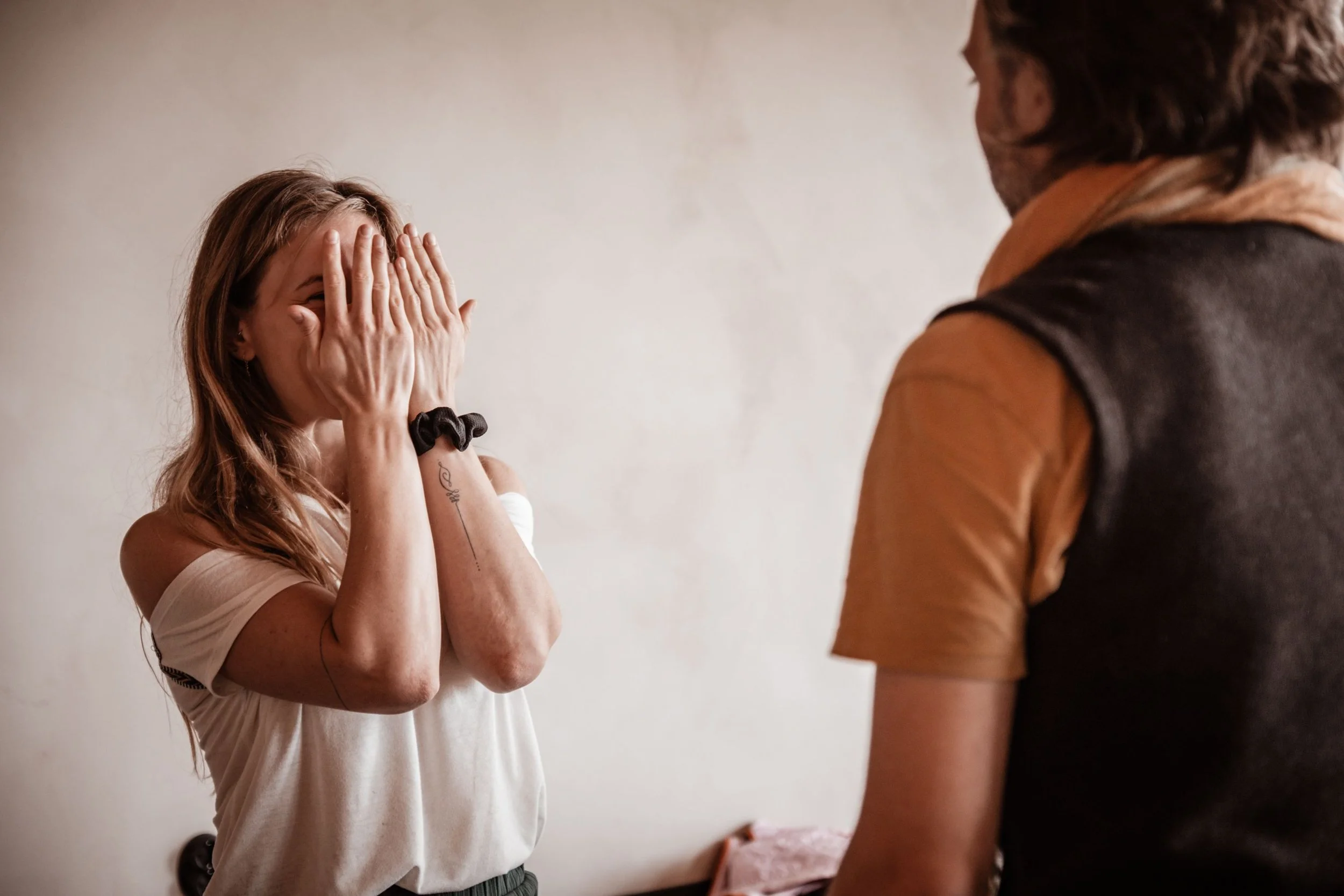
I'm back from a week at Neuthal Addiction Therapy Center and I'm still feeling it.
There is something that happens to me when I work with people who haven't chosen to be in the room with me. When the work actually lands in a place like that. It touches something very old in me.
I was an addict.
Not the kind you can hide easily. Mine was food. Bingeing until I was full enough to stop feeling. Until the shame of what I had done became louder than the pain I was running from. I remember sitting on the floor once, next to an open garbage bin, sorting through what I had thrown away in a moment of disgust. Paper. Plastic. A can. And then the food. And I put it in my mouth.
That was my altar.
I learned early that I couldn't go to another human being with my pain. I learned that connection meant abandonment was coming. So I found another route. I don't need anyone. I'm good. I performed. I danced. I trained harder. I made myself useful and charming and impressive enough to belong. And I hid everything else.
To live unknown to the world is a hell.
Because when someone appreciates you, that voice comes. You might like this part of me. But you don't know what I carry. You don't know what I have done. You wouldn't love me if you did. So the hiding is also a shield against love. As long as the love is only towards part of you, you can never fully receive it.
That is the addict's loneliness. Not the loneliness of being alone. The loneliness of being surrounded by people and still completely unreachable.
This week I brought people together in a treatment center. People who are there because they have to be, or they will die. And I brought them into their bodies. Into the present moment.
I know why they've been living outside their bodies. Because being inside has been unbearable. And because they haven't known how to be with their own body, they haven't known how to be with anyone else's either.
We worked with the metaphor of the elephant. Because when we work with traumatic injury, we are working with very young parts of the psyche. And young minds need images that make sense. So. The nervous system is the elephant. You are sitting on top of it. And the elephant is making decisions based on what the smoke alarm picks up, the amygdala, reading danger even where there is none. Because closeness was once associated with loss. So now, when you get close, the elephant panics. And you perform. Or you disappear. Or both.
We looked at what happens in the body when we remember something painful. How the elephant responds as if it is happening right now. And then I showed them that you can go to the elephant. You can let it know: I have grown up now. That was then. And I am going to show you that we have options. That we can move toward what we want, even when it is scary.
To watch a face soften in that room. A spinning mind begin to slow. A tense jaw release into something wider and quieter.
It almost brings me back to the first times I stood in front of someone else with my guard completely down. And they didn't leave. They actually came closer.
That is what I get to do in those rooms.
I am just like my clients. I am just fortunate to be sitting in this chair.
Whether someone comes to me in crisis or in curiosity, I have come to see the same thing underneath. The longing to be known. To stop hiding. To belong without performing. The costume is different. The wound is remarkably similar.