
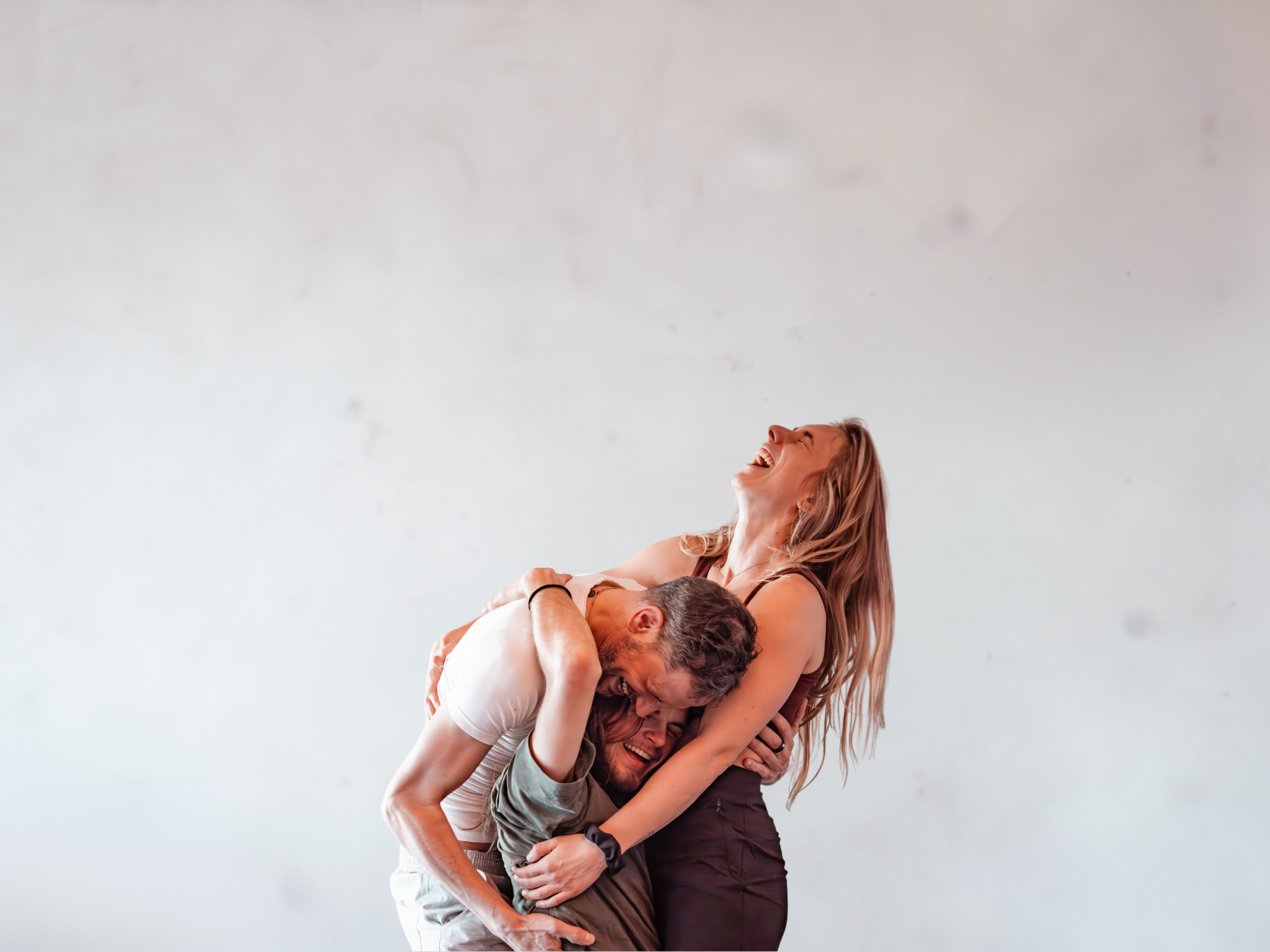
The Intimacy Training 2026/27
EMBODIMENT - AUTHENTICITY - COMMUNITY
A seven-month training in learning how to stay in contact with yourself and others when it actually matters.
You may understand yourself and your patterns very well. You may know attachment theory, trauma language and nervous system regulation. And still, when someone gets close and it really matters, you find yourself in the same loop that creates distance.
Maybe you feel hurt, but say nothing and slowly disappear. Maybe you want something from someone, but shame arrives before you can ask. Maybe another person is disappointed in you, and your whole body goes into explaining, pleasing or shutting down.
These reactions are not failures. They are ways of protecting yourself that made sense somewhere along the way. They were formed in relationship, and they need relationship in order to become visible, felt and changed.
That is why this training takes place over time and with the same group of people from beginning to end. Between the modules, smaller online integration circles help the work move beyond the retreat and into relationships, work, family life, friendships and ordinary Tuesday mornings.

You do not have to leave yourself to stay close.
What often changes with this training is the amount of room inside.
There may be a little more space between the feeling and the reaction. You may notice the tightening in your chest before you disappear. You may be able to say no without vanishing, want something without drowning in shame, or stay present when someone else is disappointed in you.
You may begin to recognise the old moment where you usually leave yourself, and return before the whole conversation is lost.
The work is not about becoming a different person. It is about becoming more available to the person you already are.
Inside the training
What usually happens, earlier than people expect, is that the version of yourself you arrived as starts to come apart a little.
Someone notices they are faking a smile because they are nervous. Someone realises they have been saying yes all morning while something inside them has been quietly moving away. Someone feels irritation rise in their stomach and spends ten minutes trying to make it reasonable, kind or mature, anything except what it actually is.
The moment it becomes visible, something real enters the space.
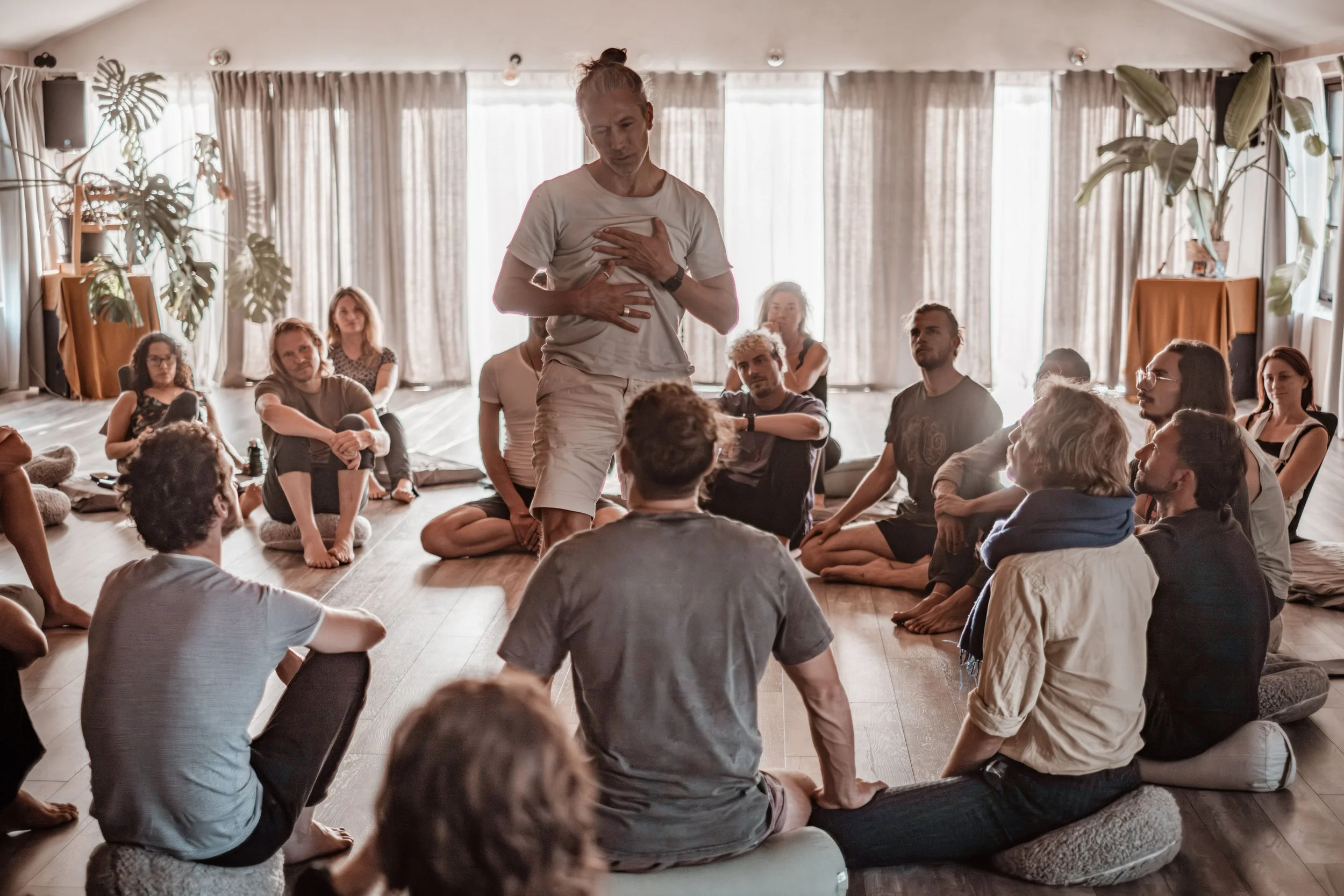
Around that person are others who are not there to fix them or wait for a more polished version. They are breathing, listening and feeling what happens in their own bodies as someone becomes more visible.

“Being met with ‘Oh, there you are. I can really feel you right now,’ when feeling like being way too much.”
KickiConflict changes shape here too. People still misunderstand one another. They get triggered, defend, withdraw, attack, go cold, please or collapse. But these moments are not treated as proof that the work has failed. They are often where the work begins.
Someone says something clumsy and someone else gets hurt. The room feels the shift. Instead of rushing into blame, explanation or repair, we slow down enough to ask what actually happened. Where did the body tighten? What was the fear? What was the impact? What was being protected? What is true now?
The training can feel intense, but much of what happens is very ordinary. Sitting next to someone you feel drawn to and not knowing what to do with that. Feeling annoyed by someone and realising you have been turning it into a spiritual insight, instead of admitting that you are annoyed. Wanting to be seen and hating that you want it. Discovering that your beautiful capacity to care for others is also sometimes a way of hiding.
Seven months gives these things enough time to show themselves.
You begin to notice the half-second before the yes that means no. The small drop in your chest when someone is disappointed in you. The heat in your belly when you want something and do not dare reach for it because wanting feels selfish. The old reflex that says, do not show this, this is too much, this is the thing that makes people leave.
And sometimes you show it anyway.
There is something exposing about being met without being reduced to your reaction. You are not made into the bad one or the wounded one. You are not rescued from the consequences of your impact either. You are invited to stay, feel, listen and come closer to the truth than the first version your nervous system offered.
By the end, the group is hard to describe to anyone who was not there. A real group of people who have seen each other tired, defended, ashamed, playful, beautiful, difficult and alive. People who have sat in the same room through crying, boredom, silence, laughter, attraction, irritation, song, late dinners and the urge to leave.
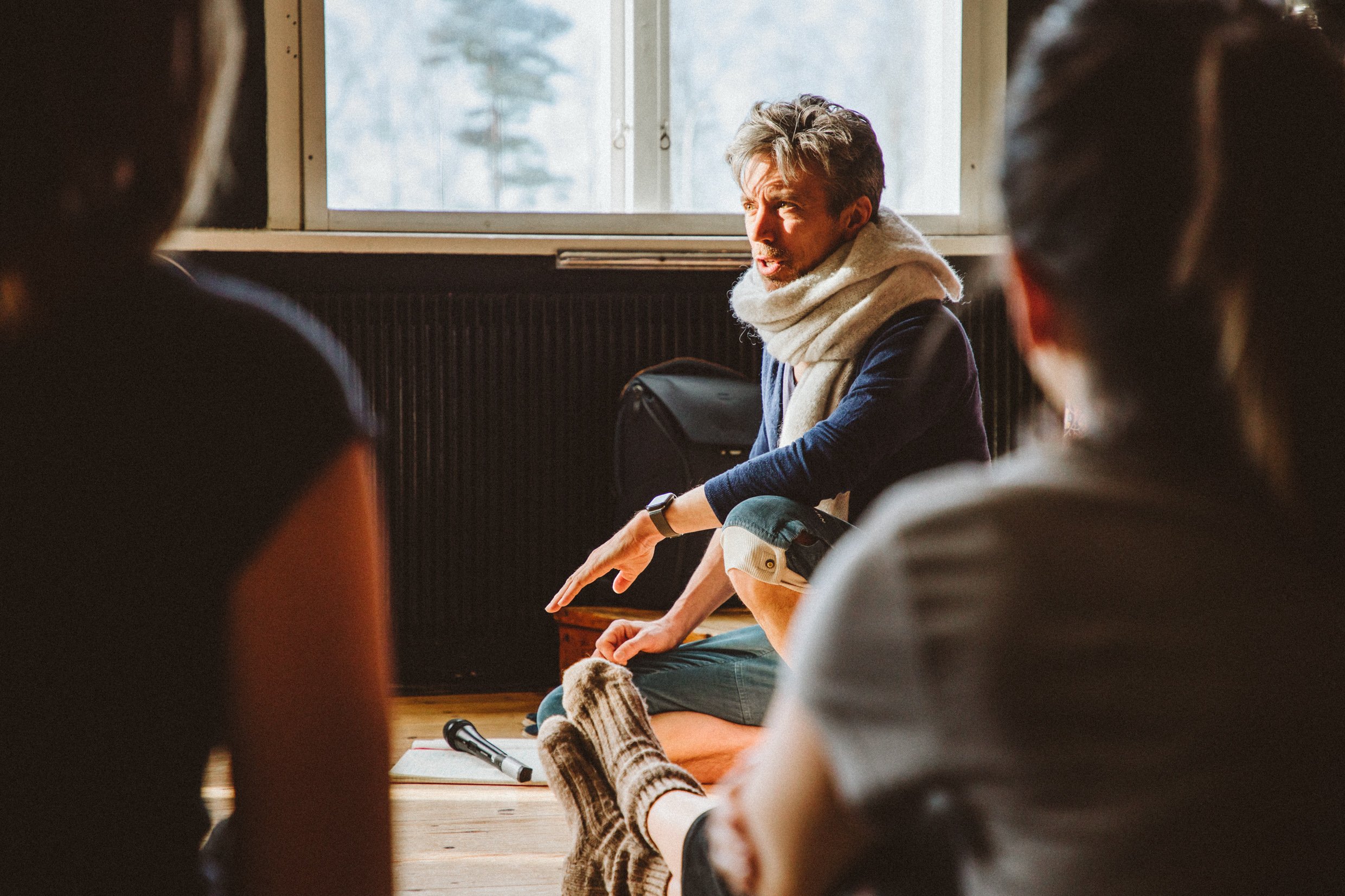
“Buster’s courage to show himself honestly and authentically, and not hide behind roles or masks, allowed me to feel safe and accepted enough to show myself too.”
MatthiasThe 4 Modules
Module OneBonding as a Community
The first module is where the ground is built. We begin with the body, the breath and the slow practice of feeling safe enough to be seen by others. Participants explore their yes and no, their need for distance and closeness, and what it can mean to belong without performing.
From Trauma to Personal Power
Module TwoIn the second module, we turn towards the protective patterns formed around pain. Fight, flight, freeze and collapse are met as intelligent strategies rather than personal failures. Through embodied work and relational witnessing, participants explore boundaries, self-trust and the life force that may be held inside protection.
The Erotic Animal Hiding in the Shadows
Module ThreeThe third module brings us closer to the parts of ourselves that can be harder to show. Desire, attraction, jealousy, shame, power, sexuality, wildness, tenderness and need. Not as performance, and not as provocation, but as human material that often gets hidden in order to stay accepted.
Integration & Celebration
Module FourThe final module asks how this work moves into life beyond the training. Into relationships, work, creativity, friendship and community. Participants explore integration, co-creation and vulnerable leadership, while asking what it means to live and create from a more honest relationship with themselves and others.



Community Agreements
The training is built on a shared commitment to consent, respect and personal responsibility. Participation in every exercise is voluntary. You are encouraged to listen to your own boundaries, slow down, step out, observe or ask for support when needed.
The training is trauma-informed, but it is not therapy. Facilitators offer guidance and support within a group setting, while participants remain responsible for their own wellbeing, regulation and care. The training is most supportive for people who are willing to meet themselves honestly and stay engaged when discomfort, uncertainty or strong emotions arise.
Participation is by application and interview. The purpose is not to identify the “right” people, but to explore together whether this training is the right fit and whether this is the right timing in your life.
Sexuality, erotic energy, attraction and desire are recognised as natural parts of human experience and will be part of the exploration. To support the integrity of the group process, romantic and sexual relationships between participants are not encouraged during the early stages of the training and there is an invitation to go slowly. Romantic or sexual relationships between facilitators and participants are not permitted.
Confidentiality is essential. Participants are asked not to share personal stories from other members outside the training.
What participants have said
“I am so afraid of being this weak, and I just got to feel that it is welcomed here. I can be that. And I do not have to stay strong because you all know I can be really, really weak.”
Cherie“This journey has allowed me to own my shadows. To see that they are not dangerous or wrong. Even celebrated by others.”
Malin“This idea that I can find some place in the world that can heal me somehow is gone. Now it is just like, cool, let’s witness this theatre until it is gone. And all of you are so deep in my heart.”
Lennart
A typical day
The day often begins with an optional morning practice. This may be yoga, Deep Fitness, tai chi, meditation, dance, breathwork or a walk in the forest, followed by breakfast.
The morning session usually runs from around 10:00 until lunch. It may include the theme of the day, embodiment practices, voice work, singing, relational exercises, inquiry, group processes or experiential learning.
After lunch there is a longer break. Many participants rest, journal, swim in the lake, walk in nature or spend time informally with others in the group.
The afternoon session often begins around 16:00 and continues until dinner. Depending on the module, it may include forum work, primal play, belly-to-belly, emotional expression, vocal improvisation, movement work or other relational explorations.
After dinner, there is sometimes free time and sauna. At other times there is a community activity such as music, dance, a fire ceremony, a temple space or an evening practice.
The schedule creates enough structure for depth while leaving room for rest, integration and the unexpected conversations that happen in the spaces between things.
The setting
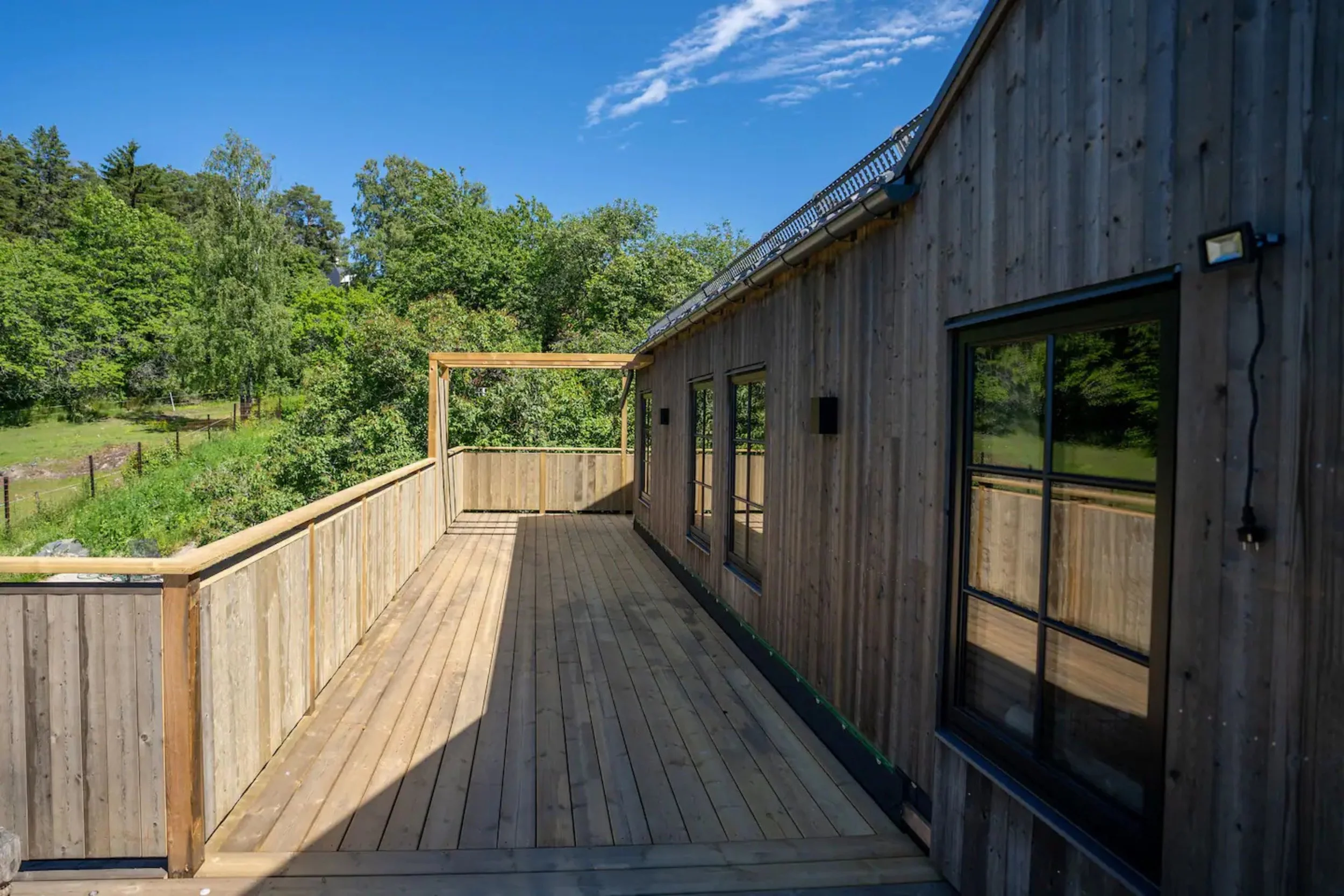
The training takes place at Björnbacka, a retreat centre in Tumba, south of Stockholm. It is surrounded by rolling fields, forest, granite rock, lakes and the quiet presence of a neighbouring horse farm.
Participants live on site during each module. When inner work becomes intense, the surroundings matter. A path through the trees, cold water, open fields, a quiet room after lunch. These things become part of the training too.
Björnbacka is beautiful without being polished. It has enough warmth and simplicity for people to settle, experiment, rest and be human together.




For those who already work with people, such as therapists, bodyworkers, coaches, facilitators or leaders, there is an optional Facilitation Track that runs alongside the Intimacy Training.
This is not a facilitation training from scratch. It is for people who already hold space professionally and want to bring what they are learning into their own practice.
Between each module, participants meet seven to eight times in a small group of four with Buster. Together, you unpack the maps, methods and techniques from the module you have just been through, with a focus on application. What does this look like in your particular context? It will be different for a family therapist, a bodyworker, a business coach or someone leading personal growth workshops.
The Facilitation Track
The track also includes practice. You teach small exercises, record sessions and bring them back to the group for reflection and supervision. The purpose is to see more clearly what you are already doing well, where you are being challenged, and how to grow your capacity to hold deep, embodied and relational work.
The Facilitation Track is an additional commitment and has a separate cost. Please mention your interest in your application.
Facilitators
The training is led by Buster Rådvik, Mara Kölpin, guest facilitators and an assistant team.
Buster is a psychotherapist and the founder of Path of Relating. He brings more than thirty years of clinical practice, facilitation and programme development, integrating somatic psychology, attachment theory, nervous system awareness and group process.

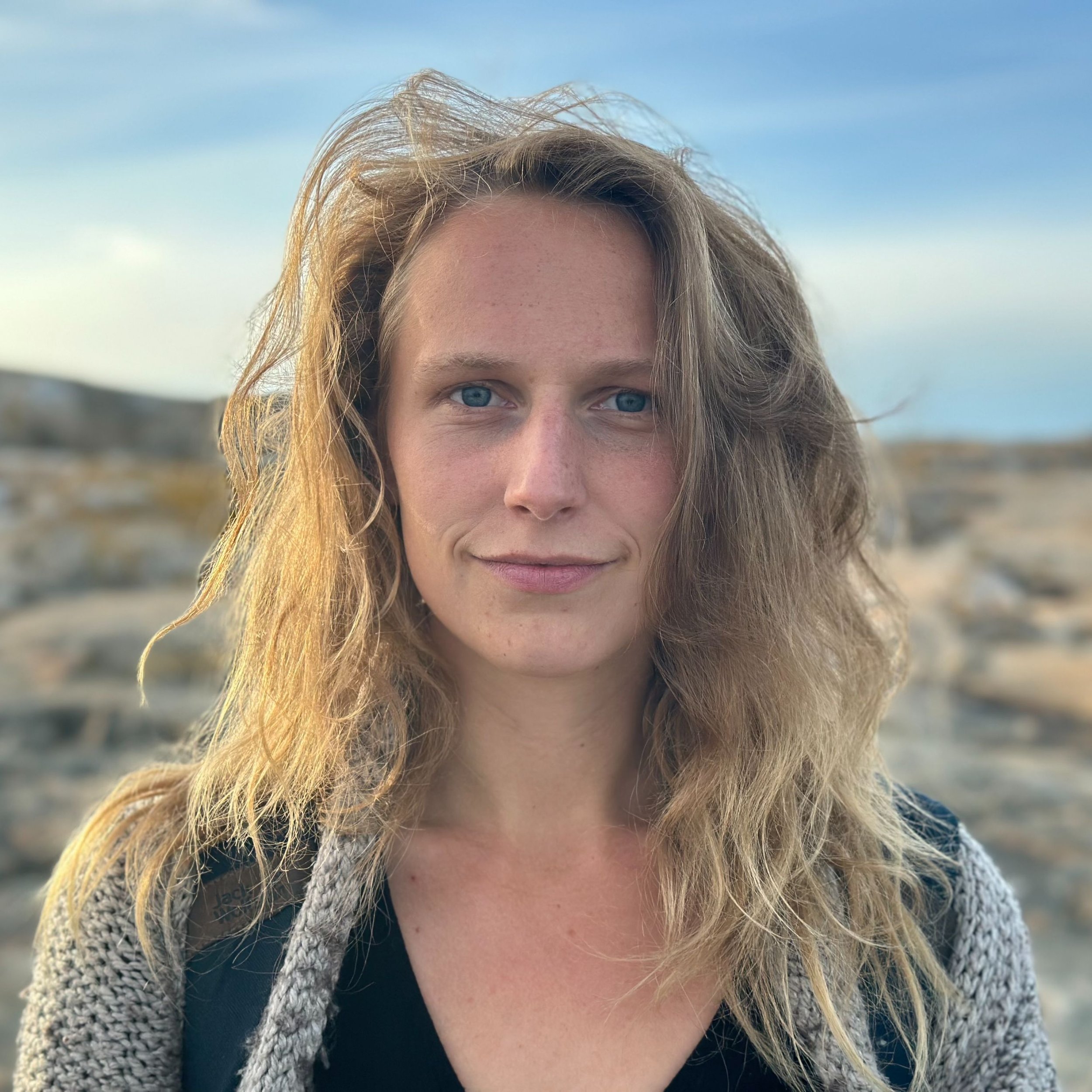
Mara is a psychologist, musician and facilitator whose work brings together psychology, creativity, voice, embodiment and relational practice.
The facilitators are supported by assistants who have previously completed the training. Their role is to help hold the practical and relational container, support participants and host the group process between retreats.
Dates & pricing
Duration: Seven months, beginning September 2026
Module 1: September 28 to October 4, 2026
Module 2: November 30 to December 6, 2026
Module 3: February 1 to 7, 2027
Module 4: April 5 to 11, 2027
Format: Four residential modules plus integration groups between modules
Location: Björnbacka, Tumba, Stockholm, Sweden
Accommodation: Shared accommodation is included. A limited number of private rooms may be available at an additional cost.
Meals: Vegetarian meals are included.
€ 1450/module
€ 1812/module
For payment through a business entity
€ 7250
For private individuals
€ 5800
The Facilitation Track has an additional fee of €1,980.
Payment plans are available for an additional €200 administration fee
Application process: Written application and interview. Secure your place with a non-refundable deposit of €600 within one week of acceptance.
The training does not ask you to become a better person. It asks something more intimate: can you stay in contact with yourself, here, with these people, when the strategies you have always relied on begin to loosen?
“I am super amazed and so grateful for this experience and for you guys bringing this out and making it possible for me and us to find it. For me this is a dream come true. And if you ever make a living community, you can count me in. I want to live like this! I don’t want to live in any other way because this is real. yeah. And I Love the way you lead with transparency and vulnerability and its just whhhaaa, I feel like this jellyfish, I am soft and floating, I am so safe and comfortable and I have so much love for all of you. Its like this unconditional love we have and there is nothing we can do that will make it less. No matter how fucked up you are, there will always be more!”
Tori