
About
Survival identities
Path of Relating is a relational practice built on a simple observation: many of the patterns that limit us were formed in relationships, and many of them soften there too.
Most of us long for closeness, yet at the same time we fear it. We want to be seen, loved and accepted, while also protecting ourselves from rejection, disappointment, shame and loss.
“I have done a lot of work, but I have never felt so safe that these things could come out for me too.”
Luna, participantOver time these protections become so familiar that we mistake them for who we are. We learn to adapt, perform, hide parts of ourselves, take care of others, stay quiet, become impressive or stay in control.
Path of Relating is not about fixing these strategies. It is about becoming curious about them and discovering what happens when they are no longer running the whole show. What happens when we reveal ourselves and are still welcome?

Feeling like a failure
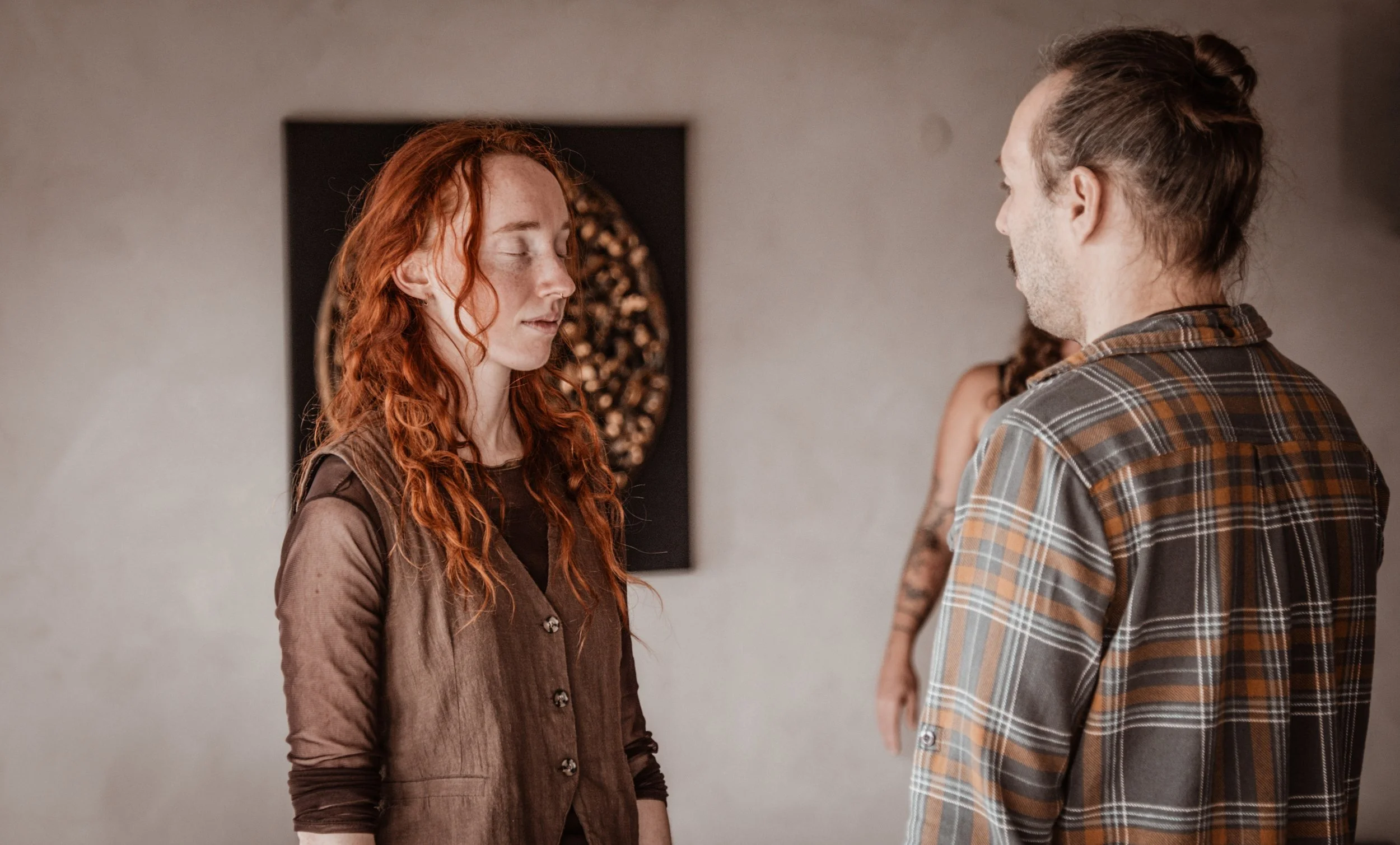
At some point during a training, someone usually finds themselves standing in the center of the room while thirty people watch.
Their throat tightens, their breath becomes shallow and their mind starts searching for a way out. They want to sit back down, explain themselves or leave the room altogether.
But they stay.
Not because the fear disappears, but because they allow themselves to be seen with the fear still there. A few words come out, then a sound, and the body begins to move in its own way. Instead of telling the story of what happened, they begin naming what it actually feels like to be there.
"My chest is tight. I want to run. I can't feel my legs. I don't want you to see this."
Slowly, they start revealing what they have been carrying alone: the shame, the anxiety, the grief, or the belief that something about them is too much or not enough.
What often surprises people is not how difficult that moment is. It is what happens next.
Not being broken
Nobody leaves, tells them to move on, or rushes in to make it better. The room stays.
And something begins to soften. The body starts to discover that what it expected to happen isn't happening. There is no rejection, no humiliation and no evidence that there was ever anything wrong with them in the first place.
"The fall when I revealed my shame wasn't one kilometre as I expected. It was only two millimetres."
Buster Rådvik, founder of Path of Relating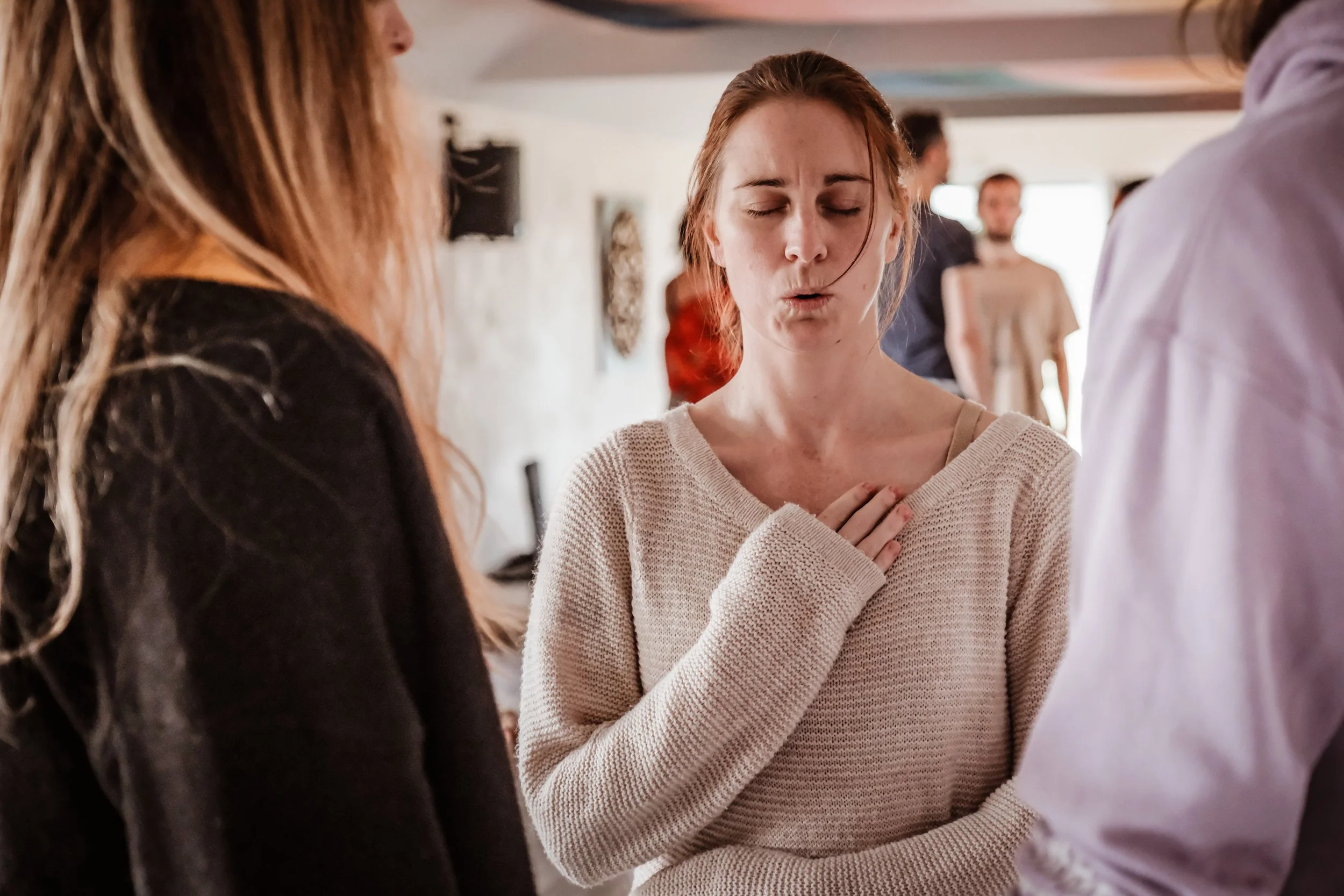
Discovering patterns
This scenario is not unusual. It happens in different forms throughout the training.
Sometimes someone discovers that they have spent most of their life swallowing anger because they were afraid it would destroy connection. Sometimes someone discovers that they have never really learned how to say no. Sometimes someone discovers that they have become so good at taking care of others that they no longer know how to ask for support themselves.
Abandoning truth
Over time many people discover that reality is safer than the nervous system predicts. The things they feared would push others away often become the doorway into deeper connection. Boundaries create trust. Honest feedback creates closeness. Revealing shame reduces it. Asking for support becomes easier. Receiving love becomes possible.
In the training we explore these patterns through embodied and relational practices. We slow down enough to notice what is actually happening inside us while we are in connection with another person. We learn to track the moment our chest tightens, when we want to withdraw, when we start performing, when we stop listening to ourselves, or when we begin abandoning what is true in order to save the relationship.
We are not teaching intimacy. We are practicing it.
"There’s so much pain in relating, but God have we held it tenderly."
Buster Rådvik, founder of Path of Relating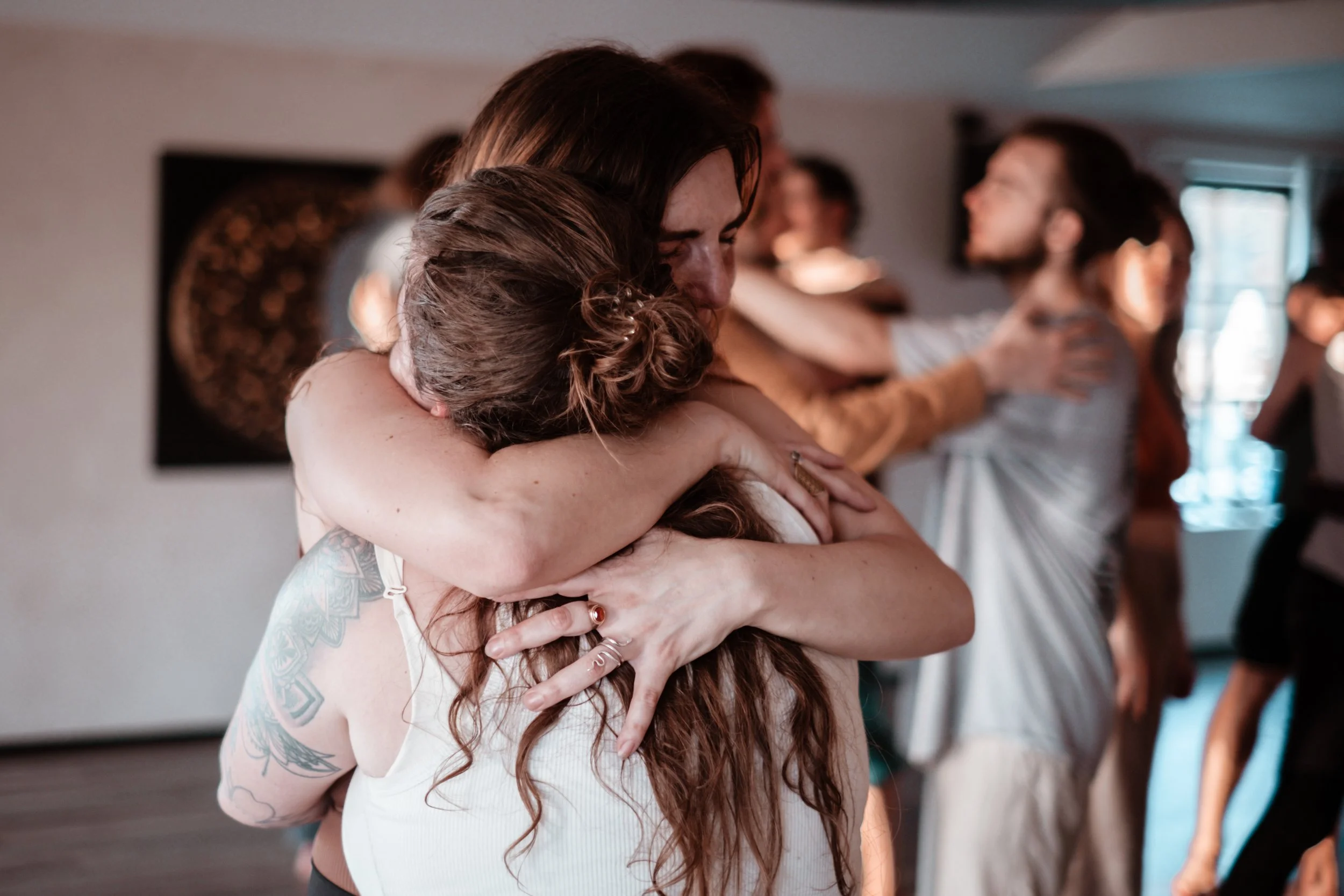
Feeling safe to be me
The changes are often surprisingly ordinary. People speak about breathing more deeply, feeling their feet on the ground, trusting their own yes and no, and feeling more present with their partner, their children, their friends and themselves.
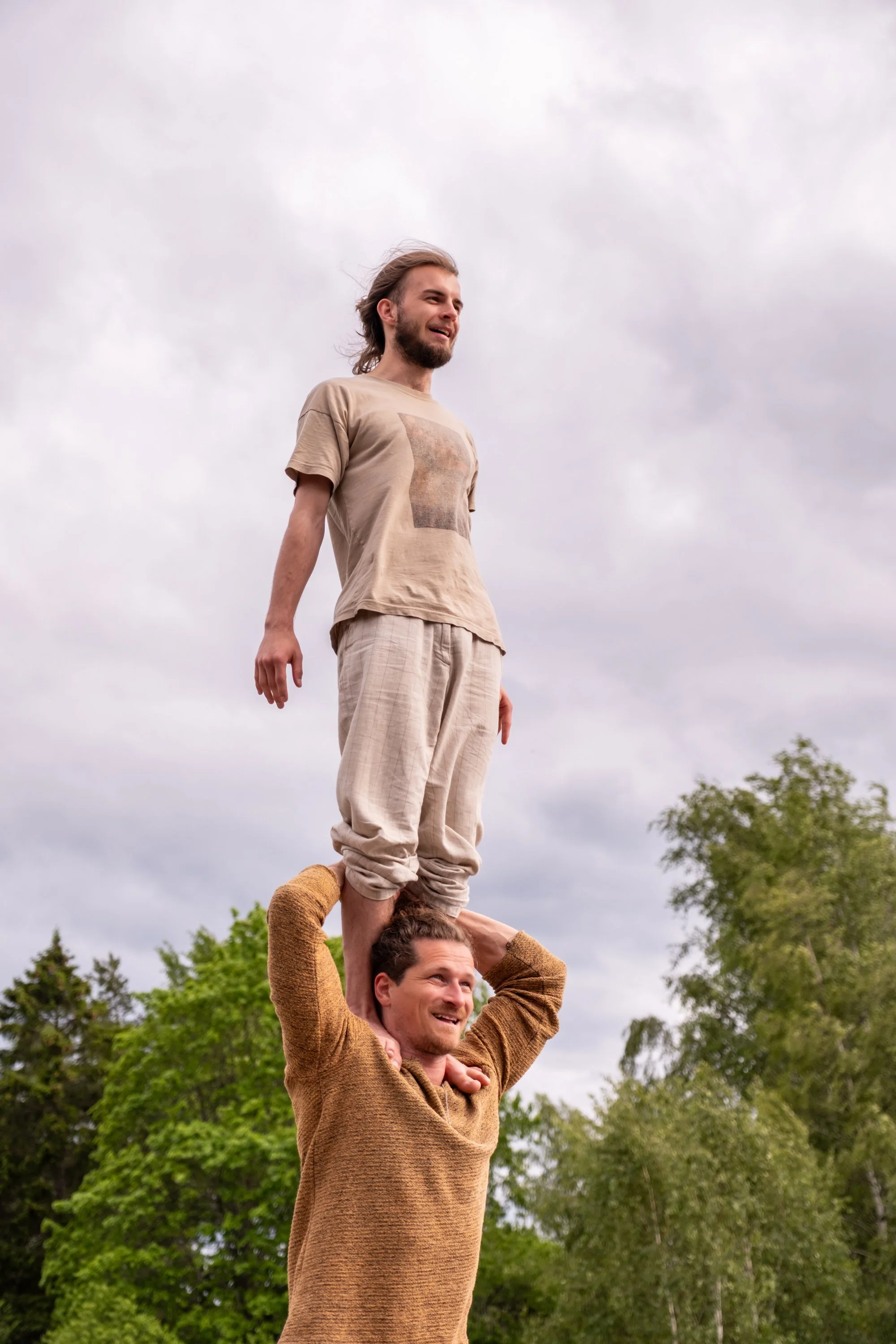
Perhaps the deepest shift is not that people become someone new. It is that they gradually stop hiding who they already are. They discover that they can be fully themselves and still belong.
“Without boundaries, there is neither safety nor freedom. I love discovering how free I feel when I feel safe. Trusting that my body knows, that deeper knowing is always there.”
Malin, participant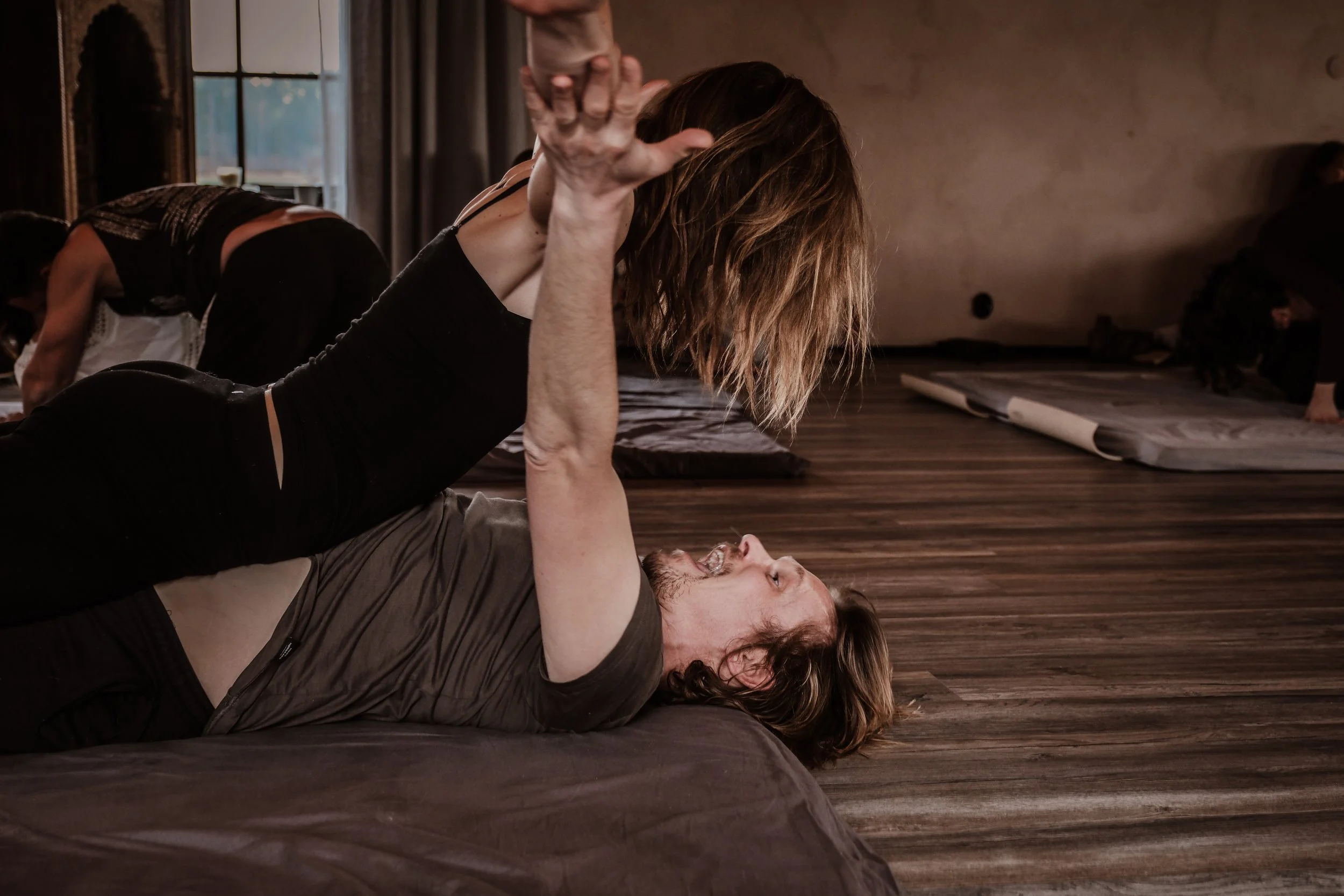
"To be my ugliest, yelling, screaming, hating, and to be loved all the way through. To be my weirdest, cringiest self, acting out, crawling, falling, letting all expressions out into the open, and to be loved all the way through."
Kicki, participant